Professional project · Ongoing
Workpulse
A workforce productivity platform by Bluecast Technologies, evolved from a custom SPML Group solution, with distributed backend services, RBAC, and real-time notifications.
 Node.js
 NestJS
 TypeScript
 gRPC
 PostgreSQL
 Prisma
 Redis
 Kafka
 Docker
 GitHub Actions
 Next.js
 Tailwind CSS
 TanStack Query
 shadcn/ui
Overview
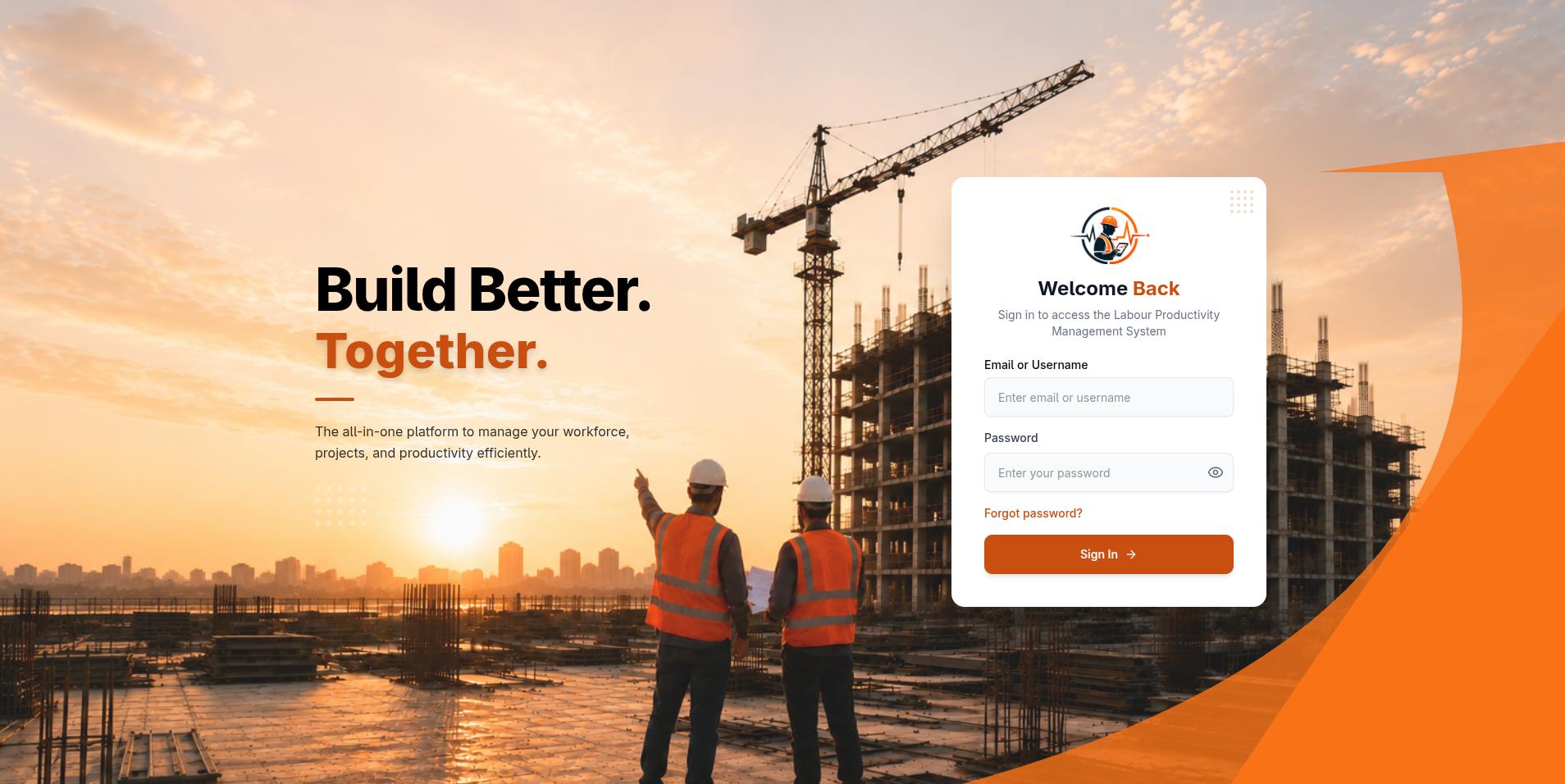
Workpulse is a Workmen Productivity Management Platform developed by Bluecast Technologies. It brings workforce operations and productivity information into a shared platform, helping organizations monitor activities and coordinate day-to-day work.
The product originated from a custom Workmen Productivity Management System built for the SPML Group. That enterprise-specific implementation was subsequently forked and evolved into Workpulse, a reusable product initiative by Bluecast Technologies.
This is a professional project developed with a team. My work focused on backend engineering and the evolution of the original implementation into a more adaptable product architecture.
From enterprise implementation to product
An enterprise-specific starting point
The original system was developed around the SPML Group's workforce operations and productivity-management requirements. That provided the starting point for the platform's business workflows and backend capabilities.
Evolving into Workpulse
The implementation then became the foundation for Workpulse. Product development involved adapting an enterprise-specific system into a platform that could accommodate a broader range of organizational requirements.
I contributed to this evolution through backend services, database design, authorization, and integrations. The product belongs to Bluecast Technologies; this case study describes my engineering contributions within the team.
My role and contributions
I worked primarily on the backend development and engineering of the platform, contributing to its architecture, core services, data access, and communication between services.
My contributions included:
- Backend services: design and development using NestJS and TypeScript.
- API and service contracts: REST APIs and inter-service communication using gRPC.
- Database design: PostgreSQL schemas and data access layers using Prisma.
- Authorization: RBAC and permission management across roles, functions, and privileges.
- Real-time notifications: WebSocket-based communication supported by Redis Pub/Sub.
- Event-driven integration: communication between backend components using Kafka.
- Deployment workflows: Docker-based containerization and CI/CD automation using GitHub Actions.
- Product evolution: helping adapt the original enterprise implementation into a more reusable backend architecture.
Key engineering components
Workforce operations
The backend supports the business workflows behind workmen productivity management and workforce operations. The platform brings operational information together so that organizations can understand workforce activity and productivity in context.
Centralized access control
RBAC organizes roles, functions, privileges, and access permissions. This provides a shared authorization foundation for backend capabilities as the platform's workflows expand.
Real-time notifications
WebSockets deliver updates to connected clients, while Redis Pub/Sub supports the notification mechanism behind that delivery. My work included connecting backend events to the real-time communication layer.
Distributed service communication
The platform uses gRPC for inter-service communication and Kafka for event-driven integration. Defined service contracts and event messages support communication across the distributed backend.
Deployment automation
Docker provides containerized application packaging, and GitHub Actions supports automated deployment workflows. My contributions included work on these delivery processes alongside backend development.
Architecture and technology
Workpulse uses a distributed microservices architecture built around NestJS backend services. REST APIs expose application capabilities, gRPC supports service-to-service communication, and Kafka supports event-driven integration.
PostgreSQL and Prisma handle persistent application data. Redis supports caching and Pub/Sub, while WebSockets provide the client-facing real-time communication channel.
These components have distinct responsibilities across API requests, application data, notifications, and backend events. Defined interfaces help coordinate their implementation across the team.
| Area | Technologies and approaches |
|---|---|
| Frontend | Next.js, Tailwind CSS, TanStack Query, shadcn/ui |
| Backend | Node.js, NestJS, TypeScript |
| APIs and service communication | REST APIs, gRPC |
| Persistent data | PostgreSQL, Prisma |
| Caching and notifications | Redis, Redis Pub/Sub, WebSockets |
| Event-driven integration | Apache Kafka |
| Delivery | Docker, GitHub Actions, CI/CD |
| Authorization | RBAC, roles, functions, privileges, permissions |
Platform preview
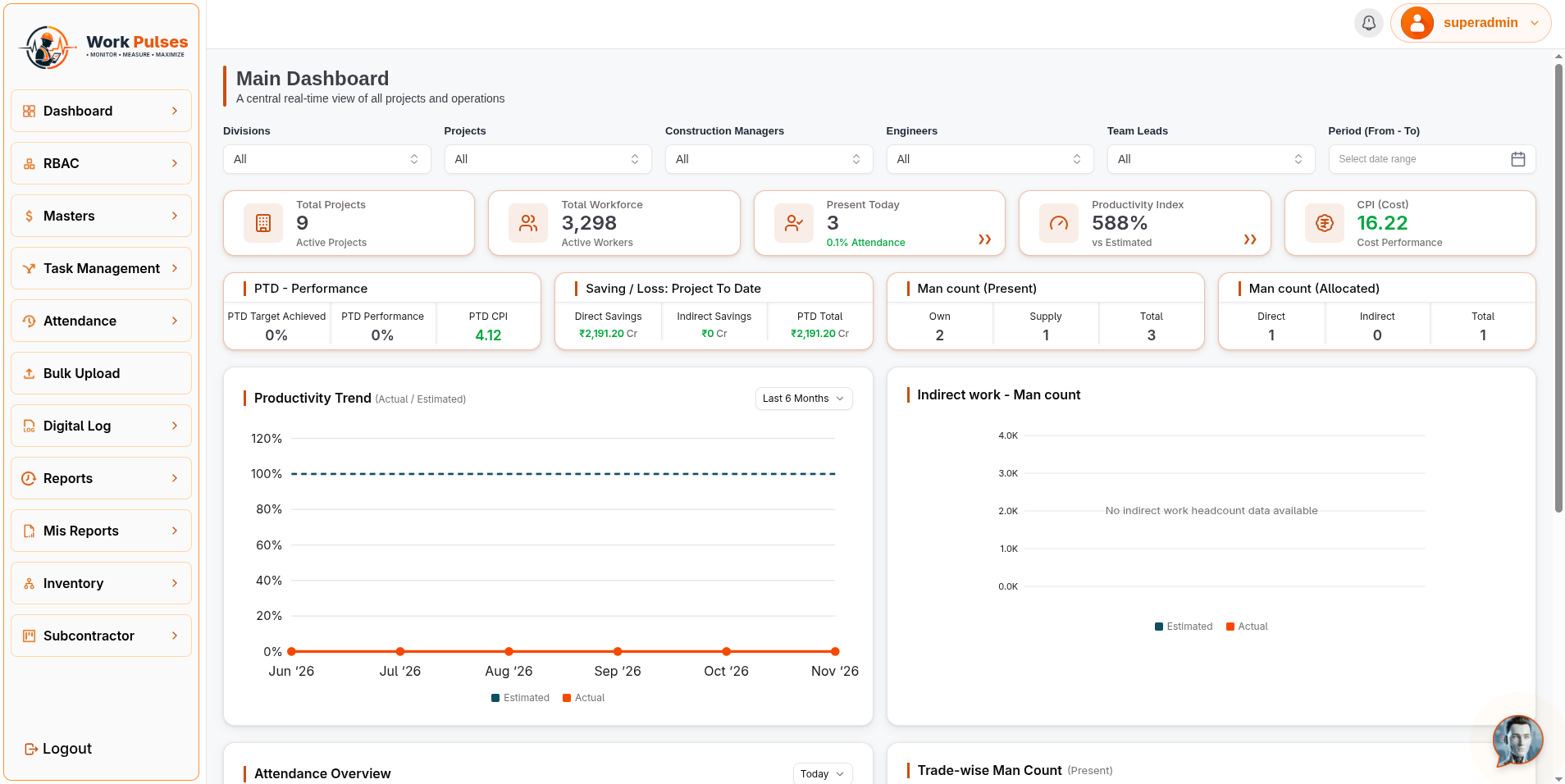
The Workpulse dashboard brings workforce and productivity information into a shared operational view.
Engineering perspective
Workpulse gave me experience contributing to both an enterprise implementation and its evolution into a product. That transition puts attention on which requirements belong to one organization and which capabilities can be reused more broadly.
My contribution centered on the backend work that supports that evolution: clear service contracts, application data models, consistent authorization, real-time communication, and repeatable delivery workflows.
The engineering story is a collaborative one: helping a team evolve an enterprise solution into a product through the backend systems and integrations behind it.